You know, when it comes to construction and manufacturing, picking the right materials makes a big difference. Lately, Tin Bronze castings have really been gaining attention because of their awesome properties. If you're curious, you can check out more about themhere. According to a recent report on the global alloy market, bronze castings make up quite a chunk of the scene — and for good reason, since they’re pretty durable and versatile.
What makes Tin Bronze Castings stand out is how resistant they are to corrosion, which is especially handy for Marine stuff. They can handle the salty environment way better than some other materials, and studies from 2022 even showed that using these castings can boost the lifespan of parts by over 30%. Of course, it’s not just about durability — companies should also think about the costs. While they might be a bit pricier at first, in the long run, the savings really add up.
That said, there are a few hurdles to watch out for. Not every supplier can promise top-notch quality, so it’s crucial to source responsibly. Picking the right foundry and doing good quality control are super important steps. By keeping these things in mind, businesses can make smarter decisions that lead to better results for their projects — it’s all about weighing the pros and cons carefully.
Benefits of Tin Bronze Castings in Industrial Applications
Tin Bronze Castings offer exceptional advantages in various industrial applications. One notable benefit is their corrosion resistance. This quality makes them suitable for marine and outdoor environments. The tin content enhances durability, reducing wear and tear over time. This means less frequent replacements and maintenance, leading to cost savings.
Additionally, tin bronze castings exhibit excellent machinability. This property allows for precise manufacturing processes. Parts can be shaped and finished to exact specifications. It is beneficial for creating complex components. However, achieving the desired finish may require careful planning and execution.
Another key feature is their good thermal and electrical conductivity. This makes tin bronze castings ideal for electrical components and heat exchangers. For high-temperature applications, they perform reliably under stress. Yet, users must be cautious about potential brittleness in extreme conditions. A balanced approach ensures that the benefits are maximized. Overall, tin bronze castings are a versatile choice for many industrial needs.
Chemical Composition and Properties of Tin Bronze Alloys
Tin bronze alloys are known for their unique chemical composition, which typically includes copper, tin, and other elements. The presence of tin enhances strength and corrosion resistance. The typical chemical composition of tin bronze includes around 90% copper and 10% tin. Some alloys may also contain small amounts of phosphorus and lead for improved machining. According to reports from industry associations, tin bronze castings have an impressive tensile strength that can exceed 70,000 psi.
In various applications, tin bronze exhibits excellent wear resistance. This is particularly beneficial in marine environments where exposure to saltwater can degrade other materials. Suppliers report that castings made from tin bronze can last significantly longer than those made from standard brass. However, it's worth noting that while tin bronze is durable, it can be susceptible to dezincification if not properly formulated. Understanding these properties helps in selecting the right material for demanding projects.
Furthermore, the machinability of tin bronze can vary depending on the specific composition. While many alloys are easy to machine, others may give operators a harder time. This variability can lead to increased costs and project delays. Therefore, careful consideration of the specific alloy and its attributes is crucial before making a final decision. An informed choice may mean the difference between success and failure in your project.
Comparison of Tin Bronze with Other Casting Materials
When comparing tin bronze with other casting materials, the advantages become evident. Tin bronze is known for its excellent corrosion resistance, making it suitable for harsh environments. Reports show that tin bronze can withstand marine conditions better than aluminum or iron castings. This is crucial for applications like ship fittings and coastal structures.
In contrast, silicone bronze castings offer unique benefits. They provide higher strength and better wear resistance. However, their higher cost can be a drawback for some projects. Industry studies indicate that while silicone bronze may last longer, the initial investment can deter budget-conscious decisions.
Tin bronze often weighs less than steel while offering comparable strength. This lightweight property decreases transportation costs. Some might argue that the performance of aluminum is better in certain cases. Yet, the durability of tin bronze often outweighs those advantages. In specific applications, such as plumbing and electrical components, tin bronze proves to be the superior choice for longevity.
Why Choose Tin Bronze Castings for Your Next Project? - Comparison of Tin Bronze with Other Casting Materials
| Casting Material | Density (g/cm³) | Tensile Strength (MPa) | Thermal Conductivity (W/m·K) | Corrosion Resistance | Applications |
| Tin Bronze | 8.8 | 400 | 45 | Excellent | Marine, Electrical Components |
| Aluminum Bronze | 7.5 | 500 | 65 | Good | Offshore, Pump Parts |
| Cast Iron | 7.2 | 200 | 50 | Fair | Automotive, Machinery |
| Steel | 7.85 | 600 | 38 | Poor | Construction, Tools |
Applications of Tin Bronze Castings in Marine Engineering
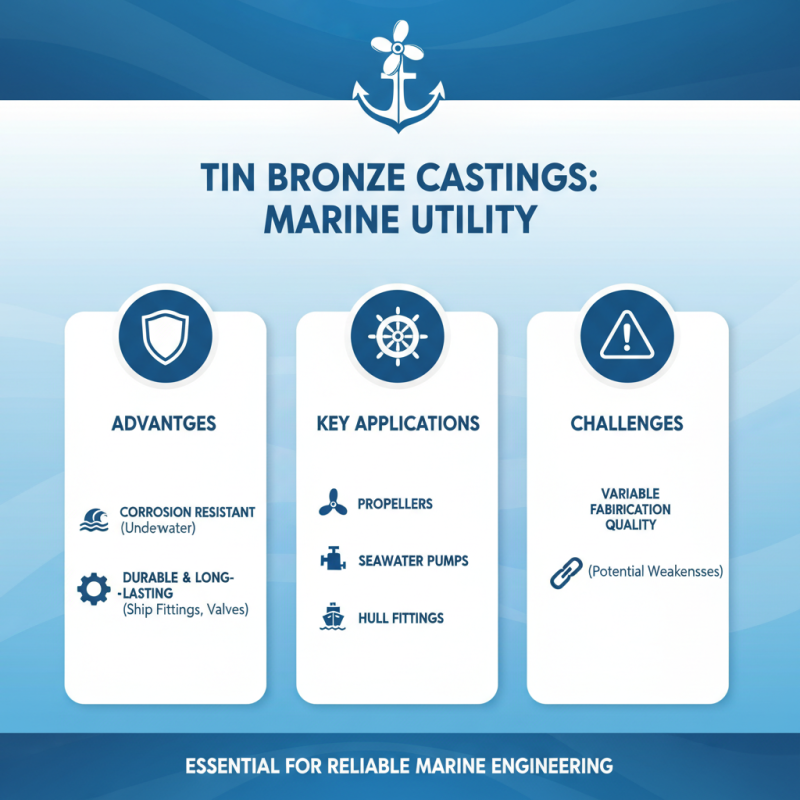
Tin bronze castings offer remarkable utility in marine engineering. Their corrosion resistance is vital for underwater applications. Components made from tin bronze last longer than those of other materials. This durability makes them an ideal choice for ship fittings and valves. However, challenges remain. Fabrication quality can vary widely, leading to potential weaknesses.
One prominent use is in propeller components. These parts endure harsh conditions, such as salty water and strong currents. Tin bronze castings provide the strength needed for reliable performance. Yet, the casting process itself may introduce defects like porosity. Engineers must be vigilant about quality control.
In addition, tin bronze is often compared to beryllium bronze castings in specific applications. While both are strong, their properties differ significantly. Tin bronze offers good machinability but may lack the hardness of beryllium bronze. Each has its strengths and weaknesses, creating a need for careful selection in design phases. Ultimately, understanding these materials ensures optimal performance for marine projects.
Cost-effectiveness of Tin Bronze in Manufacturing Projects
Tin bronze castings offer a unique blend of durability and cost-effectiveness for various manufacturing projects. The material is not only strong but also resistant to corrosion. This makes it ideal for components subjected to harsh environments. In many cases, choosing tin bronze can significantly reduce long-term costs. Maintenance expenses drop due to the alloy's resilience. Many industries appreciate this advantage.
When comparing tin bronze to alternatives like Aluminium bronze castings, the differences become apparent. Tin bronze often comes at a lower initial cost. However, some projects may require the specific properties of aluminium bronze. This choice might lead to higher costs upfront. Yet, it could result in lower maintenance over time. The decision should weigh both short-term savings and long-term implications.
It’s essential to reflect on the project requirements. Not every project needs the strength of aluminium bronze castings. Likewise, tin bronze may sometimes fall short in specific applications. A careful assessment can save money but also lead to regrets. Balancing costs and performance can be tricky. It’s a decision that deserves careful thought, especially when budgets are tight.
Performance Characteristics: Strength, Corrosion Resistance, and Durability
Tin bronze castings offer impressive performance characteristics that make them an excellent choice for various applications. One of their most notable traits is strength. This alloy is known for its robust structure. It can withstand heavy loads, making it suitable for demanding environments. Many industries, from marine to automotive, benefit from this strength.
Corrosion resistance is another key feature that sets tin bronze apart. This material resists the damaging effects of moisture and saltwater. It’s particularly valuable in coastal areas where rust and corrosion can be ongoing issues. Tin bronze maintains its integrity even when exposed to harsh conditions. However, it’s essential to note that not all tin bronze alloys are the same. Some compositions may offer better resistance than others.
Durability is paramount when selecting materials for long-lasting projects. Tin bronze castings exhibit impressive wear resistance. They often perform well in friction situations, like gear mechanisms. Nonetheless, careful consideration should be given to the specific application. In some cases, a tin bronze casting may not meet all performance expectations. It's crucial to analyze project requirements thoroughly.
Industry Standards and Certifications for Tin Bronze Casting Processes
When considering tin bronze castings, understanding industry standards and certifications is crucial. These standards ensure that the casting process meets specific quality and safety requirements. Various organizations provide guidelines that help manufacturers produce reliable and durable casts. Adhering to these helps avoid potential failures in applications.
Certification often involves thorough inspections. They verify material composition, mechanical properties, and dimensional accuracy. Such evaluations can reveal flaws that might go unnoticed. It's a reflection of commitment to quality. However, not all manufacturers may meet these stringent standards, which raises concerns about reliability.
Transparency in the certification process is essential. Without it, clients can face unexpected challenges. Selecting a partner who values these industry standards can help mitigate risks. A well-defined process can yield excellent results. Yet, it’s important to understand that even certified products might have hidden imperfections. Continuous evaluation and feedback are vital in enhancing casting processes.
Why Choose Tin Bronze Castings for Your Next Project?
This chart illustrates the mechanical properties of tin bronze compared to other common materials used in casting. Tin bronze is known for its excellent wear resistance, corrosion resistance, and strength, making it a favored choice in various applications.
FAQS
: The service aims to provide easy access to information and support for users.
This service is open to everyone, regardless of their background or experience.
You can sign up online and follow the instructions provided during the registration process.
Currently, the service is free to use. Future fees may apply, but that will be communicated clearly.
You can reach out to customer support through the given channels for assistance.
User data is stored securely and not shared without consent. However, stay cautious online.
Yes, users can request to delete their accounts, but be aware this is often permanent.
Feedback helps improve the service, but not every suggestion can be implemented right away.
Yes, the service is compatible with most mobile devices, making access easier and more convenient.
Information is updated regularly, but some details may take time to reflect changes or improvements.
Conclusion
Tin Bronze Castings are an excellent choice for various industrial applications due to their unique properties. These castings exhibit superior strength, corrosion resistance, and durability, making them ideal for demanding environments such as marine engineering. The chemical composition of tin bronze alloys enhances their performance characteristics, allowing them to outperform many other casting materials in terms of longevity and resilience.
Additionally, Tin Bronze Castings are cost-effective for manufacturing projects, balancing initial investment with long-term savings due to reduced maintenance needs. The article also highlights industry standards and certifications that ensure the quality and reliability of tin bronze casting processes. Overall, the advantages of tin bronze castings significantly contribute to their increasing popularity across multiple sectors.